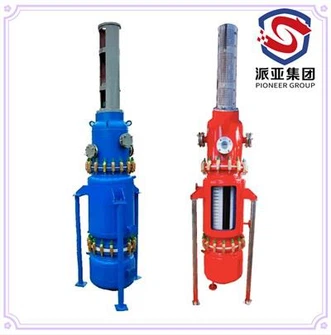

The higher the circulating flow rate of the heat transfer oil in the glass-lined reactor, the higher the degree of turbulence, which helps to reduce the non-uniformity of its temperature distribution in the furnace. To be precise, reducing the flow rate will aggravate the uneven heating of the heat transfer oil, and the thermal degradation speed of the heat transfer oil will be accelerated. Since coking is a non-heat-transfer substance, when a 10mm thick heat-conducting oil is deposited on the furnace tube wall of the thermal oil furnace, the temperature difference between the inner and outer walls of the furnace tube is more than 300 degrees. That is to say, when the temperature of the hot oil on the inner wall of the furnace tube is 300 °C, and the temperature of the outer wall of the furnace tube is more than 600 °C, the furnace needs a higher temperature, and the heat transfer can meet the requirements.
If the temperature is too high, the furnace tube of the hot oil furnace will be softened, and there is pressure in the furnace tube. Therefore, bubbling will be generated on the furnace tube first, and the heating will continue. The furnace tube will be heated, bubbling, cracked and oil leakage. Burning, burning hot oil and houses, causing loss of people, property and materials. Therefore, the coking of the heat transfer oil heating pipe is the main reason for the fire of the hot oil furnace. Don't ignore it!