Zibo Pioneer Import & Export Co., Ltd

Storage Tank

Company Profile


PIONEER GROUP was founded in 2006, covered an area of 50,000㎡and has more than 200 employees. The headquarters of PIONEER GROUP which located in Zibo city, Shandong province - a famous manufacture base of chemical equipment in RR.China, also build two new manufacturing bases in Weifang city, Shandong province and Zhangye city, Gansu province.
Glass lined and stainless steel reactor, storage tank/receiver, distillation tank , film evaporator, vacuum dryer, filter, separator, heat exchanger, condenser, column systems and various accessories. Also can specializes in GMP standard products and customized operating unit of chemical process.


Why Choose Us


Our Factory
PIONEER GROUP is a professional design & manufacture in chemical equipment especially in glass lined equipment with advanced technology, completed production equipment, perfect quality control system and intimate sale and after-sale service.


Our Certificate
Certification of ISO 9001:2015, Design & manufacture License of pressure vessel, 10 Certificate of Patent


Production Equipment
CNC plasma cutting machine, CNC rolling machine, Automatic submerged arc welding machine, Swagging machine, Grinding machine, PLC control underground electric furnace, Coating room, Painting room, Spark tester, Thickness indicator, RT/MT tester, Hydraulic test machine and etc.


Our Service
The R&D department welcome customization with many years experience,we can design and order all kinds of glass lined and stainless steel products and non-standard products according to the requirements of customers.


 

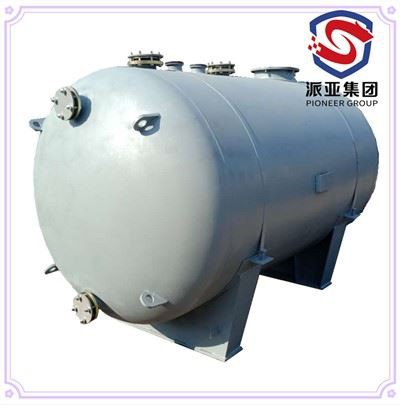
Horizontal Glass Lined Storage Tank


What is Storage Tank?

A storage tank is a container, typically large, used to store various types of liquids, gasses, and sometimes solids. These tanks can be found in many different industries such as oil and gas, chemical manufacturing, water supply, and agriculture. Their primary purpose is to hold a substantial amount of material in a controlled environment — be it under pressure, at a specific temperature, or within certain chemical conditions — to ensure that these materials are available in sufficient quantity and appropriate quality when needed.
Storage tanks are containers that store various liquids, gases, or solids for different purposes and industries. They can have different shapes, sizes, materials, and designs, depending on their function and application.


Benefits of Storage Tank


Clear Floor Space
Reducing the number of containers creates more floor space and eliminates clutter that can get in the way of your operation. By eliminating the number of containers, you can more efficiently organize, store, and label fluids.


Accessible Fill Ports
Compact fluid storage with accessible fill ports makes it easier to buy fluids in bulk, which is often more cost-effective.


Improved Mobility
A storage tank is easier to move, keeping employees from rolling multiple drums from point A to point B in order to dispense fluid. This is less time-consuming, but more importantly, it is safer for employees who no longer have to strain or risk injury when rolling, pushing, pulling, or breaking (moving from standing position) a drum.


Mitigating Waste
Storage tanks allow you to condense half-full containers of fluid to reduce the amount of waste caused by excessive packaging. Many polyethylene tanks are translucent, so you can easily track the total amount of fluid remaining in your operation.


Type of Storage Tank
 

Fixed Roof Tanks: These tanks have a stationary roof, often cone or dome-shaped, and are designed for storing liquids with low vapor pressures. They are commonly used for storing crude oil, refined petroleum products, and water.


Floating Roof Tanks: Equipped with a floating roof that adjusts with the liquid level, reducing vapor space and evaporation losses. There are two types of floating tanks which are External Floating Roof Tank (EFR) and Internal Floating Roof Tank (IFR). They are suitable for liquids with higher vapor pressures like gasoline and diesel fuel.


Horizontal Tanks: Tanks oriented horizontally, ideal for storing liquids with low vapor pressures such as water and chemicals. They are space-efficient and commonly used when space is limited.


Pressure Tanks (High-Pressure Vessels): Designed to store liquids or gasses at high pressures, typically cylindrical with a robust wall to withstand pressure. Widely used in industries like chemicals, petrochemicals, and power generation.


Vertical Tanks: Tanks with a vertical orientation, are commonly used for storing liquids with low vapor pressures like water and chemicals. They are space-saving and preferred when the ground area is limited.


LNG Tanks: Specialized tanks for storing liquefied natural gas at extremely low temperatures around -160°C. These tanks are often spherical or cylindrical, insulated to maintain low temperatures, and crucial in the natural gas industry for LNG storage and transportation.


Materials of Storage Tanks


The choice of material for constructing storage tanks is crucial and depends on the chemical properties of the material to be stored, environmental conditions, cost considerations, and the desired lifespan of the tank:


Steel: Widely used due to its durability and strength. Different steel grades offer varying levels of corrosion resistance based on the stored material. It can be coated or lined to prevent corrosion and is suitable for a wide range of temperatures and pressures.


Concrete: Preferred for large tanks that store water, sewage, and certain chemicals. Concrete offers good structural integrity and fire resistance and it is advantageous in terms of cost for large volumes.


Polyethylene and Fiberglass: These are used for chemically resistant tanks or water tanks in small to medium sizes, offering excellent resistance to corrosion. However, they may not be suitable for high-pressure applications.


Stainless Steel: Used for tanks that store aggressive chemicals or food products due to its corrosion resistance and non-reactive properties compared to regular steel.


These materials offer different advantages and are chosen based on factors like the type of substance being stored, durability requirements, cost-effectiveness, and resistance to corrosion or chemical reactions.


Application of Storage Tank
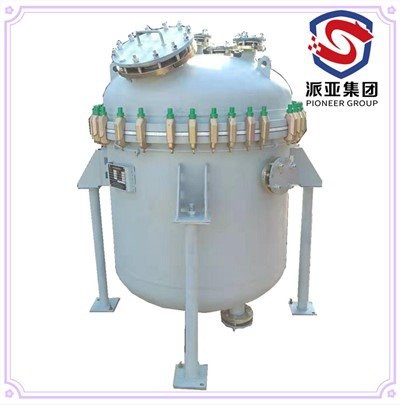
Vertical Glass Lined Storage Tank
Horizontal Glass Lined Storage Tank
Stainless Steel Horizontal Tank
Hastelloy Tank

Chemical storage
A storage tank plays a crucial role in safely housing a diverse array of chemical substances in chemical industries. It is designed with corrosion-resistant materials compatible with specific chemicals, ensuring the integrity of the stored content and the container. A chemical tank also adheres to stringent safety standards to mitigate the risks of handling hazardous substances.


Food and beverage industry
Storage tanks are integral to the food and beverage industry, supporting the production and distribution of various products. They store raw materials, intermediate products, and final goods, which guarantees a streamlined and reliable supply chain. Moreover, the design of these tanks prioritizes hygiene to prevent contamination and maintain the quality and safety of the stored products.


Liquefied natural gas storage
Liquefied natural gas (LNG) tanks are critical in the LNG industry, where natural gas is cooled to extremely low temperatures for storage and transportation. These containers store LNG in a condensed form and are often insulated and constructed from materials that withstand low temperatures. They also play a key role in the global energy infrastructure, enabling natural gas distribution as a cleaner energy source.


Petroleum storage
Petroleum storage tanks are vital components within the oil and gas industry. They serve as reservoirs for crude oil and refined petroleum products. These tanks usually constructed from steel provide a secure and controlled environment to store large quantities of hydrocarbons. Furthermore, their strategic placement in oil refineries and distribution centers ensures a continuous and reliable supply chain.


Pharmaceutical storage
Pharmaceutical tanks are specifically designed to meet the rigorous requirements of the pharmaceutical industry, where precision is paramount. These containers store raw materials, active pharmaceutical ingredients (APIs), and finished products. The materials used in construction are carefully selected to prevent interactions with the stored substances.


Water storage
Water tanks are fundamental in meeting the demand for clean water in various sectors. They are commonly made from materials like concrete or plastic and store water for purposes ranging from commercial consumption to industrial processes. In addition, they provide a reliable reservoir for ensuring a continuous water supply in urban and agricultural regions.


The Different Final Manufacturing Process of Storage Tank

Plate-by-plate method

The first method of storage fabrication is the plate-by-plate assembly of the shells, bottoms and roofs. This means that the shell plate and the bottom sheets are rolled to the radius stipulated by the customer's requirements.
The main factor determining the quality of the tank metal structures, produced by this method, is strict provision of their shape (referred to the design), and the set of technological decisions, preventing residual distortion of the metal frameworks during edging.

Coiling method

Coiling is another approach to the storage tank process. The storage tank shells, bottoms and roofs are brought to the construction site in the form of coiled strip panels, meant for welding.
The advantages of this method are to be seen in making the tank installation period 3-4 times shorter as a result of cutting down the volume of welding procedures in the building area by about 80%.
This also provides high quality of welding joints due to the use of two-side automatic welding.

Stainless Steel Vertical Storage Tanks
 

How are Storage Tanks Fabricated?


Design and Engineering
Storage tank engineering takes into account the unique needs of the application—the material to be contained, the required pressure and temperature, the storage duration, the types of containment needed, etc.—and the regulatory requirements to create a suitable tank design.
Fixed roof tanks have a domed or cone-shaped roof that is permanently attached to the shell. These are used mainly for water storage.


Foundation
Storage tank foundations are crucial for ensuring the optimal performance of the tanks and preventing containment issues. The right foundation for a tank depends on factors such as the soil condition, environmental conditions, size of the tank, tank application, and containment needs. Some AST foundation types include.


Fabrication
Storage tanks are generally fabricated in fabrication shops, workspaces designed especially to meet the space requirements of fabricating large metal components for tanks. Such a space will have several acres of laydown space, as well as heavy equipment like cranes and welders. Here, skilled technicians take the specifications from the design engineers and translate them into the components of the AST.


Installation
Once an storage tank is fabricated and the site is prepared, it’s time for installation. This can be as simple as unloading the fully assembled AST onto the prepared foundation on the site (if the tank is small enough); it can also mean delivery of the tank components to the site, to be assembled on-location by an experienced installation crew (large ASTs).


Evaluation and Certification
Once a tank has been installed, it must be evaluated and certified before it can be put into use. Due to the nature of many substances stored in ASTs, which can be hazards to environmental or human health and are often valuable substances, critical to the operations of an organization, ensuring that the vessel is fit for service and meets all applicable standards and regulations is necessary before it can be put into service.


How to Maintain Storage Tank
 
 
Drain the storage tank

If you have a large storage tank, make sure to flush the water to a location where it will not inundate the surroundings. The dryer the tank the more effective the end result will be, so make sure to use a pump or wet vac to remove any water left behind from the draining process. Alternatively, use a towel to wipe away any leftover moisture.

Scrub the interior This is probably the most important part of the cleaning process. You want to remove any dirt, silt, or slime that has accumulated on the walls of the tank. Power washers are a great tool for the job, as some tanks don’t allow enough room for your to easily reach in and scrub the interior yourself. If you don’t have a power washer, use hard-bristled brushes, a mop with an adjustable handle, or any cleaning tool that can be applied at an angle. The idea is to be able to reach every corner of the tank, and to deliver enough force to remove all the scum and silt that has formed since the last cleaning.

 
Rinse out the tank

Use cold water to rinse out the dirty water that has accumulated throughout the scrubbing process. You don’t have to be as thorough this time around, as you’ll be another round of rinsing later on in the cleaning process.

 
Bleach the interior

Use your bleach solution (1 tablespoon of bleach for every gallon of water) to scrub the interior of the tank. You should be wearing disposable gloves and eye protection during this phase. Again, you can just use your hands for this process, but you need to make sure you can reach every surface of the tank.

 
Rinse out the Storage Tank

After the bleach has done its job, it’s time to rinse it out. You want to be as thorough as possible because bleach is toxic and a big no-no when it comes to drinking water. So be certain no bleach is left behind. If you ran some of the solution through your water pipes, make sure to run your taps with hot water. You want to continue rinsing or running the taps until all the soap or bleach bubbles are gone.


Our Certificate
 

Certification of ISO 9001:2015, Design & manufacture License of pressure vessel, 10 Certificate of Patent


20220427083423efc981ab9d014b0bad1369b38d15b7cb.jpg (900×524)


FAQ


Q: What is a storage tank used for?

A: A storage tank is a tank designed for storing liquid substances. Although it is mainly used in the petroleum industry (petrol tanks) , it can also be used in other industries, for example, it is used in the food industry (oil storage tanks) and the fertilizer industry.

Q: What is called a storage tank?

A: Summary. Storage tanks are used to hold crude oil, produced water, and gas condensate for brief periods to stabilize flow between continuously producing wells and periodic pipeline or trucking transportation. These storage tanks are typically fixed roof design and operate at or near atmospheric pressure.

Q: How does a storage tank work?

A: The water is typically fed into the tank through the inlet pipe. Tanks usually have level indicators to stipulate the water level in the tank; these control the flow of the inlet pipe. On the outlet side, tanks use gravity or a pump to distribute the water.

Q: Which organelle is known as the storage tank?

A: A vacuole is a sac-like cell organelle that stores fluids. It is surrounded by a phospholipid membrane. Plant cells contain a large vacuole, called the central vacuole, that functions as a storage tank for water and other molecules.

Q: Why do you need a storage tank?

A: Their main function is to store a variety of materials, from chemicals to foodstuffs and water. These are just some of the many applications for this type of facility. The primary issue emphasized by the manufacturers is the safety of the storage tanks in terms of their use.

Q: What is the most common type of storage tank?

A: Vertical storage tanks are the most common type of storage tank, and they are used to store liquids such as water, fuel, chemicals, and pharmaceuticals. They are cylindrical in shape and can range in size from small to large. They are designed to stand upright and can be either single-walled or double-walled.

Q: Is a storage tank a water heater?

A: A storage water heater, or a hot water system (HWS), is a domestic water heating appliance that uses a hot water storage tank to maximize water heating capacity and provide instantaneous delivery of hot water.

Q: What do storage tanks hold?

A: Storage tanks are big containers, often cylindrical in shape, that are designed to hold large quantities of liquids or gases. They often have piping and pump stations to move the contents. Depending on the intended use, they can be located underground or aboveground.

Q: What is the main function of storage tank?

A: Storage tanks serve two major purposes. One is to provide storage volume and the other is to provide pressure to the distribution system. A particular tank can serve one or both purposes depending on its location within the system and its type of configuration.

Q: What cell is called a storage tank?

A: Vacuoles - Simply put, vacuoles are storage tanks of the cell. Plant cells have one (1) Large Central Vacuole. Animal cells have a few small vacuoles or none at all. Vacuoles store primarily water, food and waste material.

Q: What is the principle of storage tank?

A: A water storage tank holds clean water from your reverse osmosis system until a demand for water is initiated in the house or business. Water is pumped into the tank from a water source, such as a well or a reverse osmosis system. The tank accumulates water until it reaches its maximum capacity.

Q: What is the bottom of a storage tank called?

A: The settlings—sediment, dirt, oil emulsified with water, and free water—that accumulate in the bottom of storage tanks. The tank bottoms are periodically cleaned up and settlings can be disposed of or treated by chemicals to recover additional hydrocarbons. Tank bottoms are also called tank settlings or tank sludge.

Q: What is the difference between a storage tank and an indirect tank?

A: Tankless Coil and Indirect Water Heaters | Department of Energy
Indirect water heaters are a more efficient choice for most homes, even though they require a storage tank. An indirect water heater uses the main furnace or boiler to heat a fluid that's circulated through a heat exchanger in the storage tank.

Q: What is the difference between a storage tank and a day tank?

A: Unlike larger bulk fuel storage tanks, which store fuel for extended periods, day tanks are smaller in size and intended to provide fuel for a limited duration, typically 8 to 24 hours. They are positioned close to the generator set, ensuring quick and efficient fuel delivery during power outages or emergencies.

Q: How to pump water from storage tank to house?

A: If you're using a water tank to store and supply your home with water, you'll need to install a water tank pump. This will push the water out of the tank and provide you with pressurised water at the various tap points in your house.

Q: What is the difference between a storage tank and a pressure tank?

A: Pressure vessels store gases or liquids at a pressure above atmospheric pressure. Their Maximum Allowable Operating Pressure (MAOP) starts at 15 PSI but can reach up to 150,000 PSI. On the other hand, storage tanks have an MAOP of 15 PSI and only hold gases or liquids at atmospheric pressure.

We're well-known as one of the leading storage tank manufacturers and suppliers in China. Please feel free to buy or wholesale high quality storage tank at competitive price from our factory. For more information, contact us now.

goTop

(0/10)

clearall